
Grid Gigs, Merch Fatigue, and Passenger Princesses!!
How F1 Merch Went from Team Kits to Overhyped Status Symbols


Hi there! Welcome to Track Limits, a weekly newsletter where we break down the biggest headlines in F1 and explore the questions, topics, and trends that are shaping the sport. Nothing is off-topic and a little fun is always part of the mix!!
Good Afternoon!! Sprint weekends are turning into one big tease!! They’re chaotic, electric, and finally give drivers room to actually race. But then Sunday rolls around and gone are the brave lunges, the amazing battles and the creative strategies — what the f*%k is going on? Austin, unfortunately, was no exception.
Sure, Norris and Leclerc had a feisty couple of laps. Verstappen took advantage of the papaya rules like a true champion and, somehow, has gone from being booed last season to earning cheers this year. And rookies Colapinto and Hadjar are running out of time to convince Alpine and Red Bull to bet on them for 2026.
But was it an AMAZING race weekend? Hmmm… the overwhelming feeling is that it had potential for so much more!!!

Kind of love this specific moment at the end of the season when everyone is tired, pushed to their limits, but realizes it’s now or never!! It’s the perfect cocktail for unhinged answers, sassy attitudes and off-track shenanigans — sometimes even on-track ones!!
3. Grid Gigs!! Before the weekend had started, Formula 1 announced a new addition to the weekend format: a 15-minute pre-race concert on the grid featuring a relevant local artist. Call me crazy, but I absolutely LOVE this idea!! For years, I have been talking about how most race weekends lack any real local identity — at least for fans at home — and how it’s a missed opportunity for hosts not to showcase their country and culture to the millions of fans tuning in on Sunday afternoon. Instead, we usually just get to see some greenery and sand around the track — maybe a bit of the nearby city if we’re lucky. That’s it!!
So a concert is a perfect way to give races a bit of a local flair — music is a universal language that connects people from all demographics, it adds real value to the fan experience, creates a unique and shareable media moment, it gives Formula 1 a new sponsorship product to sell, and it even works as a low-effort entry point for new fans brought in by local artists. Kind of genius if you ask me!!
The only issue I have is that it’s unclear whether fans at home can actually watch it live — is it streamed on social or included in the broadcasters’ pre-race coverage? So this weekend, I completely missed it and had to hunt it down a day later on Formula 1’s YouTube channel. Not ideal, but hey, better than nothing!!
All in all, I hope this becomes a regular part of the Sunday build-up and that it expands beyond just the American races. And yes, the usual grumpy purists are already complaining, but come on…15 minutes before cars leave the garages isn’t too much to ask, is it?!!
2. WhatsApp’s Group Chat A few hours after the race, videos started circulating of Ricciardo lip-syncing the American national anthem, voice notes of him talking about the Sainz–Kimi incident and trash-talking Ferrari — which, let’s be honest, is standard content in any decent F1 group chat!! There were even screenshots of what looked like a WhatsApp group where the Aussie driver was the admin. Like most fans, I was confused and suffering from some serious group chat envy!!
That’s exactly what WhatsApp was counting on when they partnered with OffBall for this activation! The concept is based on a format the media startup has used before with other sports, called The Chat, where they have athletes live react during a sporting event. This weekend was the first time they did it in Formula One, and honestly, WhatsApp and Ricciardo couldn’t have been better partners for it.
By using WhatsApp’s existing Community feature, the brand took advantage of the “second-screen” behavior most of us have during sports — think texting friends, checking stats, or scrolling social media — to create a unique shared experience for a select group of fans. The exclusive nature is genius because it created the feeling of being a small community of fans and it promoted fans who were part of it to share every fun moment with their friends and followers — turning the whole thing into an organic brand awareness multiplier that went way beyond the event itself. Honestly, hats off to WhatsApp — and yes, I now follow the company purely to see what they come up with next!!
1. Passenger Princess Two weeks ago, Formula 1 and Amelia Dimoldenberg announced they were teaming up for an original YouTube series — Passenger Princess — featuring several drivers alongside the queen of dry humor herself!! And not to toot my own horn, but I’ve been saying for over two years that Amelia would be the perfect partner for F1 and here we are!!
This announcement is interesting for a few reasons. First, it’s Formula 1’s first original long-form content truly made for the internet. Sure, Grill the Grid is a YouTube series, but it still screams traditional media!! Passenger Princess, on the other hand, ticks all the boxes for a social-first show built to thrive in today’s attention economy: optimized for shareable moments, leans into authentic imperfections to feel personal and like it belongs on social media, uses the whole social media ecosystem for storytelling — not just YouTube — and, most importantly it’s personality-led. This isn’t some random show with F1 drivers, it’s Amelia’s show — a well-established internet culture powerhouse!!
This brings me to the other reason why this partnership is so interesting — and honestly, groundbreaking for Formula One. Unlike the usual celebrity sightings on the grid, drivers at fashion shows, or race cars in Hollywood movies as a way of chasing pop culture cloud. Passenger Princess could be the first time F1 “authentically” becomes part of global internet culture. Sure, they bought their way in, but Dimoldenberg’s real interest in the sport gives it the kind of credibility and relevance F1 craves, especially with younger audiences. And who’d can blame them!!!
That said, after watching the first episode, it’s everything I was expecting!! The biggest surprise, however, was how well Russell matched Dimoldenberg’s awkward and silly energy. Whoever comes next, better bring their A-game!!
Honorable Mentions The biggest news this weekend was probably Apple acquiring the U.S. broadcasting rights. Surprised? Not really, since I made the case for it back in March — wow, I’m tooting my own horn a lot today, sorry!! But in all honesty, I’m genuinely excited to see how this partnership plays out and how it will impact not just F1’s presence in the U.S., but the broadcast and distribution strategy of the sport around the world.
On a far more depressing note: none of the bids for this year’s FIA presidential election will be eligible. The reason is pretty straightforward — none of the candidates have the required seven vice presidents from each specific region. The bigger issue, however, is that there aren’t enough eligible members to make multiple bids possible. Of course, this raises a whole bunch of questions. None of them, the FIA seems particularly keen to answer — talk about a messy election cycle!!
Someone who couldn’t escape uncomfortable questions two weeks ago was Zak Brown, as he and McLaren are in the middle of a legal battle with IndyCar champion Alex Palou. The case is spilling a lot of tea about the inner workings of the team and how drivers are signed and courted — and honestly, it’s not pretty!! At this point, whoever the court sides with is almost a footnote, because the public perception of everyone involved has already taken a serious hit!!
Okay, this is getting way too long, so let’s do a quick roundup of the remaining Austin shenanigans!! COTA now has a rollercoster — didn’t know they were building one, but thank you to whoever thought of it!! — and teams tried to get their drivers on it, but only Kimi was spotted having the absolute time of his life!!!
Six teams brought special liveries to Austin, but honestly, only one was actually fun — Vcarb’s tortoise-inspired design!! Just like the trophies, liveries are getting less and less playful. Sure, it’s understandable that teams have to balance sponsor demands with performance needs, but whatever happened to Formula One’s cheeky side and bold moves?
Speaking of fun, I’m sooo happy Austin delivered the most unhinged and impractical trophy I’ve seen in years!!! I’ve been b%tching and moaning about forgettable trophies for ages, but this cow-head-shaped masterpiece is epic. I just hope they keep it until 2034 — yep, they extended their contract!!!
Finally, we have to talk about the most low-key mean thing a Grand Prix host has done!! Somewhere on the circuit, the promoter put up a “Wall of Heights” — as I’m calling it!! —with life-size silhouettes of drivers and their heights. Naturally, everyone took photos next to them — which, as we know, is a sensitive topic!! So when Norris’ silhouette got hidden behind a decorative hedge, TikTok absolutely lost its mind. Were promoters pushing the boundaries? Totally!! Was hiding it the best move from Norris’ team? (At least that’s the theory) Not really — it just added fuel to the fire!!

Merch Fatigue
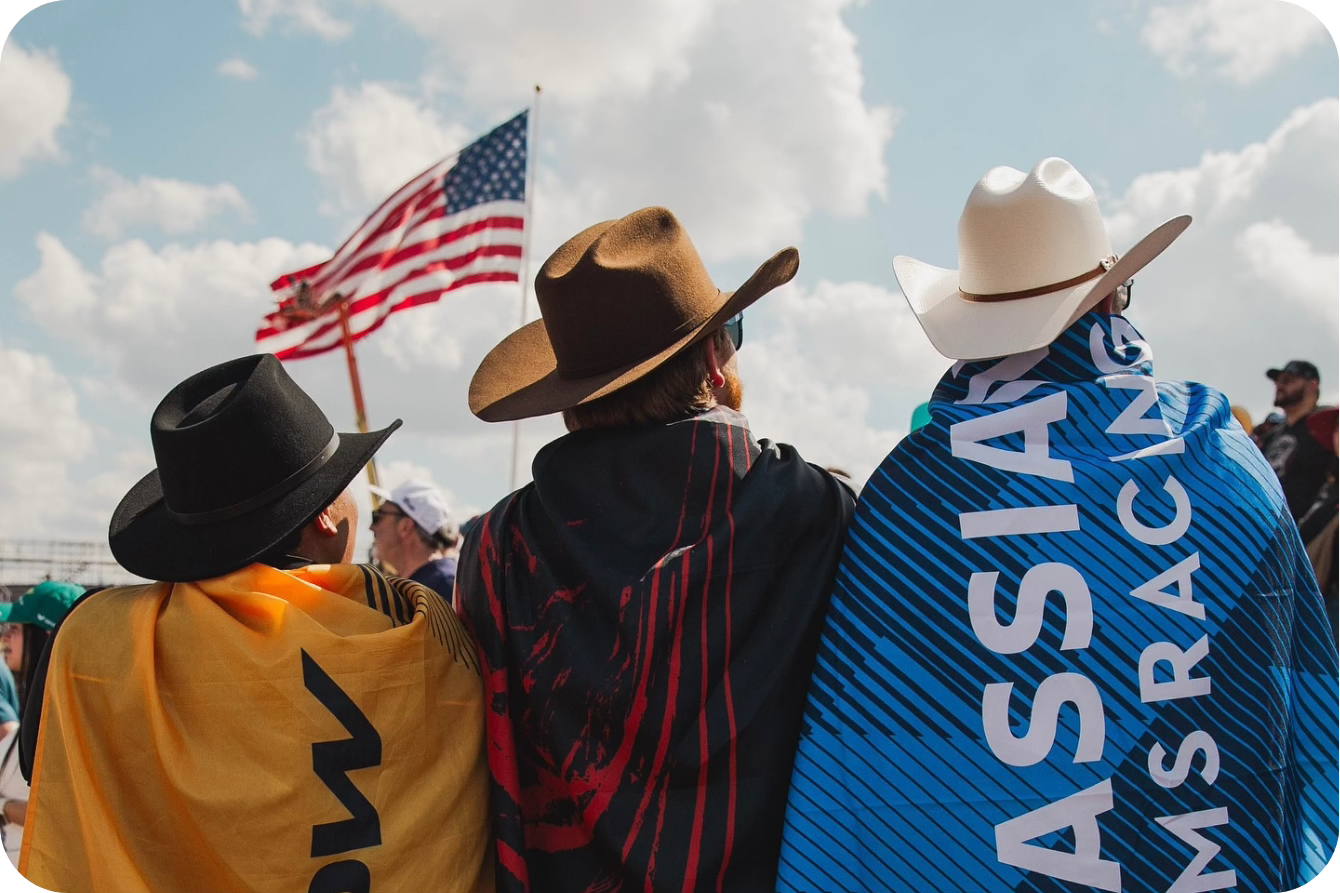
Teams, drivers, F1 Academy and even Formula 1 itself have released more capsule collections these past three seasons than most fans can keep up with. The United States — the biggest sports market in the world and a key pillar of F1’s global expansion strategy — has become the hot spot for merch drops.
This year’s Grand Prix in Austin was no exception. Everyone from Hamilton, Norris, Verstappen, McLaren, VCarb and even former driver Ricciardo launched an Austin collection. But unlike previous years, fan enthusiasm was muted, there was no frenzy and no instant sell-outs as was the case in previous years. Instead, there was a growing sense of fatigue.
THE REASONING:
Merchandise — also known as branded apparel — had its beginnings in the 1950s when Elvis Presley first licensed his name and likeness to fan clubs, creating one of the first band-tees. In the 1960s and 70s, with the rise of youth culture as a cultural and political force, young music fans solidified their domain on merch with band-tees like those of the Beatles, the Rolling Stones or Led Zeplin being more than just a t-shirt but a symbol of cultural and political alliances.
By the 1990s, branded apparel had grown into one of the most profitable revenue streams for artists and started to evolve into lifestyle branding — blurring the line between merch and streetwear. It was also when the fashion industry started to get involved and by the 2010s, every major fast fashion brand had a licensing deal with a popular artist or band, turning band tees into a mainstream phenomenon with global sales surpassing $6 billion.
While licensing deals — an agreement where a brand pays for the right to use the logo, likeness or other intellectual property on a product — had been the standard when it came to merchandise, the intersection with the fashion industry meant that new partnership formats were starting to emerge. Among other things came the first big collaborations between fashion labels and artist — such as Helmut Lang and Travis Scott. While not technically merch, it represented an evolution of how an artist’s brand could be represented beyond a logo or a likeness.
Unlike this long-standing relationship with music, the fashion industry only recently turned its attention to sports. Since the 1980s — when leagues like the NFL, NBA, and major European football clubs first began commercializing team kits — the sports industry largely handled merchandise on its own, with little involvement from fashion.
But with sports becoming one of the last examples of mass consumer appeal and with the fashion industry facing a significant slowdown, the booming sports market — including the licensed sports merchandise market, which is projected to reach $49 billion by 2030 — offers not only an opportunity to try and offset this downwards trajectory, but a way for fashion to tie itself to one of the most culturally relevant industries today.
Formula One, as well, has seen the fashion industry become a bigger player on and off the track. While several brands have been part of the sport for years as sponsors — Hugo Boss and Tommy Hilfiger are prime examples of that — the recent rise of F1 into the global zeitgeist has ushered in a whole new era of this crossover.
Not only are more fashion labels and houses sponsoring teams, closing licensing deals with Formula 1, and collaborating on collections with teams and drivers, but the industry is also extending its influence through partnerships with WAGs, who now front major campaigns. This growing convergence isn’t just cultural— it’s big business. The clearest sign came last year when LVMH, the world’s largest luxury conglomerate, signed a 10-year global partnership with Formula 1 reportedly worth $1 billion.
While the “collision” of these two industries has broadened Formula One’s cultural influence — with motorcore making waves on runways, in street style, and across social media — and opened a new entry point for fans. It has also reshaped merchandise and co-branded apparel in ways that aren’t always ideal, bringing along many of the fashion industry’s existing problems.
From collection overload, with teams and drivers producing too many collections each year — diluting the desirability of each one and creating a sense of saturation among fans who can’t keep up — and excess inventory as collections fail to sell out. To premium pricing that excludes a significant portion of the fanbase, all while under-delivering on quality and creative innovation.
But unlike the fashion industry, where these strategic choices mainly affect revenue and brand positioning. In sports, it goes far beyond it, profoundly influencing fan engagement and loyalty — which lie at the heart of sports’ business.
Just like in music, sports merch is at its core an emotional purchase that connects fans to a community and serves as an extension of their identity — reflecting their values, lifestyle, aspirations and even aesthetic sensibilities. As such, by treating it just like another product or revenue stream, Formula One is stripping away the emotional essence that makes merch resonate with fans. Instead of community, it’s selling exclusivity. Instead of a story, it’s selling logos and clichés. And increasingly, merch and its derivatives are becoming less an expression of fandom and more a hollow status symbol.
So fangirls are doing what they do best when the system falls short: they are creating their own unofficial merch, rooted in fan culture, community, and inclusivity — both in price, fit and sizing. Ironically, this means the most interesting F1 merch today doesn’t come from the million-dollar deals in the paddock, but from the fans watching the sport at home and in the stands.
But this doesn’t mean the crossover can’t be turned around. Fans have been genuinely excited about fashion’s involvement in the sport, even if their expectations for creativity, craftsmanship, and innovative perspectives have gone unmet.
Meeting the moment, however, will require an entirely new approach to merchandise. One that includes building an ecosystem of creatives and strategists tasked with aligning and elevating merchandise and co-branded apparel to resonate with the target audience — usually younger, cultural driven fans. It also means rethinking pricing and justifying the price point with actual value. Adopting a sliding-scale pricing strategy — as Ralph Lauren has done — for example could help capture fans across income levels and life stages, making merchandise accessible without compromising quality or brand identity while creating a more recession-proof business model.
However, even the most brilliant creative concept, strong storytelling, and carefully crafted pricing strategy won’t matter without understanding the actual fan culture and what fans truly want. And the most effective way to do that is by listening to them and involving them in the process.
Club Brugge — a Belgian football club — recently showed how this can look like — they surveyed hundreds of female fans and teamed up with local female-led fashion brand MISMAS to design their women’s merch. Similarly, Colapinto partnered up with Renault Argentina to create “The Originals Fake Collection”. Aware of the financial challenges faced by fans in his hometown, he didn’t just discourage them from buying expensive official merchandise, but he offered an alternative. He built a free digital library of visual assets that fans can use to design their own merch, removing the financial barriers and inviting them to play an active role in shaping his brand’s creative narrative. Both of these examples demonstrate that co-creation is the key to bridging the gap between what teams, leagues and even athletes are putting out and what fans actually want to own and wear.
As such, until sports — not just Formula One — recognizes that merch isn’t just apparel but a form of collaborative storytelling that needs a proper creative infrastructure, clear brand direction and commercial strategy, the hype and demand for it will keep fading, one drop at a time.

The content I enjoyed these past couple of weeks!!
🗞 READ
Formula 1 Ace Charles Lecerc on Speed, Stillness and His Love of Music | Sexism, speed and meeting Toto: Susie Wolff on her life in F1 | 0.00 The Stopwatch | Sisterhood Of Speed: Yes, Black Women Love Formula 1, Too | Women’s sports sponsorships: Changing the game | Why Wales Bonner to Hermès Is Good News For Adidas
🎧 LISTEN
Passenger Princess, F1 Drivers Teach Me To Drive: George Russell | The Wall Street Journal: How NFL Stadiums Are Engineered to Maximize Profit | Securing The Win: Laurent Mekies | Data But Make it Fashion: The Rise of Orange!
Photo Credit: Circuit of the Americas